
When comparing new zealand online slots, the most useful starting point is not a bonus banner but the game information itself. Sugar Rush is a candy-themed title supplied by Pragmatic Play, and www.sugarush-nz.com can help readers identify the relevant mechanics before deciding whether the format suits them. A clear approach is to check the grid, win conditions, volatility information, RTP configuration and mobile display, then confirm which details belong to the hosting casino rather than the game developer.
The first navigation mistake is treating a game title as though it were a casino brand. This slot is an individual game, not an operator, account service or separate casino catalogue. The software is supplied by Pragmatic Play, while the casino website provides the player account, cashier, verification process and customer support. Keeping those roles separate makes the rest of the information easier to interpret.
A page may mention the original game alongside related releases such as Sugar Rush Xmas, Sugar Rush 1000 or Sugar Rush Super Scatter. These are separate titles, even when their names and visual themes appear similar. Their grid layouts, bonus mechanics, return settings and maximum advertised outcomes may differ. Before relying on any description, check the exact game name and use the title’s own information or paytable screen.
The same distinction applies when moving between free play and real-money play. A demo, where offered, does not create a game-specific account, and a casino login is not a developer login. If a reader needs help with password recovery, identity checks, deposits, withdrawals or a complaint, the relevant contact is the operator hosting the game. This simple division prevents users from searching in the wrong place for support.
This is a 7×7 cluster-pays slot rather than a conventional paylines game. Wins require at least five matching symbols connected horizontally or vertically. When a qualifying group appears, those symbols disappear and replacements fall from above. The resulting tumble can create another winning cluster within the same spin, so one spin may contain several linked stages rather than one settled result.
The visual layout is important because cluster games can be easy to misunderstand at a glance. There are seven regular candy symbols and a scatter, but no wild substitute symbol is listed for the base game. A large group may pay differently from a smaller one, with reported base-game symbol awards reaching up to 150 times the stake. Those figures describe the game’s pay rules, not a promise that a particular spin will produce a return.
The marked-position feature adds another layer to the navigation. When a winning symbol disappears, its position is marked. If another winning symbol lands there during the same tumble sequence, a multiplier can apply, increasing from 2× up to 128×. In the base game, marked positions clear when the spin ends. This means the feature should be understood as part of a single spin cycle, not as a permanent board upgrade.
RTP is one of the most important entries to locate in the information screen. The commonly listed theoretical figure is 96.50%, but operators may use lower configurations, including 95.50% or 94.50%. The active setting is therefore not something to assume from a general review or search result. Readers should open the paytable or game-information panel at the casino where the title is being offered.
RTP is a long-run theoretical measure, not a prediction for an individual session. It cannot show whether the next spin will win, how quickly a balance might change or what result a bonus round will produce. A short demonstration or a handful of spins is also not enough to verify the return setting. Treat the displayed figure as technical information for comparison, rather than as an expected personal outcome.
Volatility needs similar care. A New Zealand-facing review describes the game as high volatility, while the developer’s game information focuses on mechanics and does not state a volatility rating. That difference matters: volatility labels may come from third-party descriptions and should not be confused with an official setting. The advertised maximum win is 5,000 times the stake, but maximums are limits on a theoretical outcome, not typical results or income.
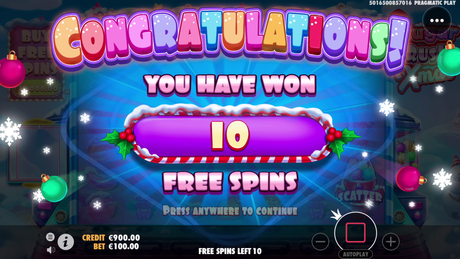
The free-spins feature begins when three or more scatters land. Three, four, five, six or seven scatters award 10, 12, 15, 20 or 30 free spins respectively. The feature may retrigger when additional scatters appear. During free spins, marked positions and their multipliers remain for the entire feature and can continue increasing, unlike the shorter-lived markings in the base game.
It is useful to distinguish this in-game feature from a casino promotion. Free Spins are generated by the slot’s rules; they are not automatically free spins granted by an operator as part of a welcome offer or campaign. A casino might include the title in a separate promotion, but its eligibility rules, expiry date, wagering conditions, game contribution, maximum bet and winnings cap would come from that operator.
Bonus Buy is another term that can cause confusion. Where available, the reported option costs 100 times the current bet and awards a random number of scatters, with at least three. Availability may depend on the operator or jurisdiction, so it should not be treated as universally accessible. It is a paid game mechanic, not a free bonus. Before selecting it, check the displayed price and rules, and consider whether the accelerated feature fits the spending limit already chosen.
A mobile browser can be a practical way to view a compatible casino site, but mobile access does not prove that a dedicated app exists. The game is reported as compatible with Android and iOS devices when the hosting operator supplies it. Any native casino application is a separate product, with its own installation process, availability and permissions. Readers should verify those details with the operator rather than assuming the game has its own app.

Screen orientation affects how clearly a 7×7 grid can be read. Landscape mode is recommended in New Zealand-facing game information because it gives the board more room and can make symbols, controls and the paytable easier to inspect. If the display feels cramped, check whether rotating the device improves visibility before changing settings or beginning play. Browser compatibility and connection quality can also affect how the interface behaves.
Look for the available controls rather than assuming every platform presents them identically. The game information describes bet adjustment, sound and volume settings, Autoplay, Quick Spin and speed controls, although availability can vary by platform or jurisdiction. These options alter presentation or play speed; they do not improve the underlying odds. A slower view may make tumble sequences easier to follow, while a quicker setting can make spending harder to monitor.
The hosting casino handles registration, age checks, identity verification, account recovery and profile requirements. The game itself does not register players or request documents. Requirements can differ between operators, so readers should consult the casino’s stated terms before creating an account or attempting to use real-money services.
Deposits and withdrawals use the casino’s cashier, not the game software. Supported currencies, New Zealand dollar availability, payment providers, transaction limits, fees and processing times are operator-specific. The game’s developer does not set those conditions or directly credit withdrawals to players.
No game-specific account tools are established here. Deposit limits, time-outs, reality checks and self-exclusion, where offered, are controlled by the operator. Readers who want those safeguards should locate them in the casino account or support area before playing, rather than looking for them in the game’s paytable.


